



Areas of Expertise
Craniosacral Therapy — Primary Treatment Method
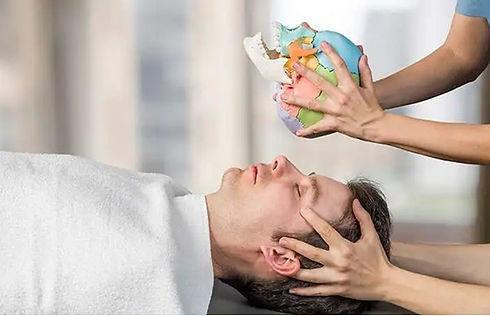
Craniosacral Therapy (CST) is Tomas's main area of expertise and primary treatment method. It's a gentle, hands-on manual therapy that assesses and supports the function of the craniosacral system — the membranes and cerebrospinal fluid surrounding the brain and spinal cord, along with the skull, spine, and sacrum.
CST is used to address chronic pain, nervous system dysfunction, and complex conditions that have plateaued in standard care, by relieving restriction around the central nervous system and supporting healthy cerebrospinal fluid flow — with the goal of improving patients' physiological function as well as their mental and emotional wellbeing.
For patients referred by another healthcare provider, CST is delivered as an adjunctive therapy within the patient's existing treatment plan, complementing - rather than replacing - the referring provider's primary care and clinical management.
A treatment progress report is submitted to the referring provider within 48 hours of each CST session to support coordinated care and help ensure that adjunctive treatment remains aligned with the provider's therapeutic objectives for the patient's recovery.
How It Works & What to Expect
Craniosacral tissues can tighten in response to injury, stress, or illness, placing strain on the central nervous system and disrupting normal function, including cerebrospinal fluid flow.
Using a light touch — less than 5 grams of pressure, about the weight of a nickel — Tomas works to relieve this tension and support more optimal function, which may include gentle work at the skull, pelvis, and spine.
CST is generally considered safe due to the minimal pressure applied, and is used with a wide range of patients, including children.
Some individuals experience relaxation, feeling energized, lightheadedness, emotional release or mild digestive changes after their first few sessions. This is a normal part of the body's adjustment process.
Post-Session Recommendations
After a CST session, it's recommended that clients drink plenty of water and avoid physically demanding activity for 1–2 days, allowing the body time to adjust and integrate the effects of the session.
Sessions can also bring up emotional responses as the nervous system releases tension. This is a normal part of the process — it's worth mentioning to Tomas if it happens.
Session Frequency
Depending on the nature of your condition — chronic, acute, or ongoing monitoring — treatment plans typically range from 2 to 10 sessions, with periodic follow-up sessions for long-term maintenance. Talk with Tomas to determine the right course for your specific condition.
Contraindications
CST is not recommended for individuals with:
● Increased intracranial pressure
● Intracranial hemorrhage (bleeding)
● Acute stroke (within 6–8 weeks)
● Tumors or aneurysms
● Recent skull fractures
● Spina Bifida
● Cerebrospinal fluid leaks
● Arnold-Chiari malformations
Medical / Orthopedic Bodywork
Medical / Orthopedic Massage targets a specific, medically diagnosed problem. While massage therapists are not permitted to diagnose their clients, a doctor's diagnosis is needed to determine if massage therapy is appropriate.
Medical massage aims to address specific health issues. It may incorporate a number of various techniques, including:
● Trigger point therapy
● Deep tissue massage
● Cross-fiber friction
● Muscle energy technique
Myofascial Release Technique, for example, targets the fascia — the web-like protective tissue that surrounds muscles, tendons, bones, ligaments, and organs. This tissue is composed of elastin and collagen fibers and can become hardened due to injury or chronic inflammation, resulting in restricted movement, pain, and biomechanical imbalances.
This technique focuses on stretching and breaking down the hardened fascia to restore flexibility and range of motion. It can take several sessions to see significant improvements, with each session often focusing on one area for extended periods. Myofascial release is particularly effective for alleviating pain from old injuries and restoring natural mobility, especially when chronic stiffness or pain persists.
Oncology massage is a specialized form of medical bodywork tailored to individuals with cancer. Practitioners undergo extensive training to meet the physical, emotional, and psychological needs of clients at all stages of cancer, whether during diagnosis, treatment, recovery, or survivorship.
Therapists trained in oncology massage are skilled in adjusting techniques to accommodate the effects of cancer treatments like chemotherapy, radiation, and surgery. The goal is to provide comfort, support, and relief throughout treatment and recovery.
Lymphatic Drainage
Lymphatic Drainage Therapy (LDT) focuses on stimulating lymphatic flow throughout the body. Practitioners are trained to feel the rhythm, direction, and quality of lymphatic flow and use advanced techniques to identify alternative drainage pathways.
Developed by Dr. Bruno Chikly, LDT combines principles of traditional medicine, manual therapy techniques, and clinical assessment.
The lymphatic system plays a central role in the removal of metabolic waste. When lymphatic flow is interrupted or becomes sluggish due to factors like dehydration, poor diet, or inactivity, it can affect the entire body. Lymphatic massage uses gentle, rhythmic strokes to manually stimulate lymph flow, which supports waste clearance and can reduce fluid retention and support pain management.
Additionally, LDT has positive effects on the nervous system, supporting the body in managing chronic conditions linked to nervous system health.
Posture & Movement Rehabilitation
Back pain, neck pain, and other neuromusculoskeletal conditions often result from weak or compromised posture. Research shows that posture is a strong indicator of overall function and long-term health.
Strengthening your posture's structural balance and functional alignment helps relieve pain, optimize performance (sports, work, etc.), and support healthy aging.
Certified Posture Exercise Professionals (CPEPs) are health and fitness professionals trained in StrongPosture® protocols, designed to be taught to people across a range of fitness levels, injury history, or ability.
Medical Investigative Thermography
The human body has a very specific temperature pattern. Changes in this pattern, as a result of inflammation or dysfunction, can be detected using thermal imaging. Medical Investigative Thermography, or Digital Infrared Thermal Imaging (DITI), is a non-invasive screening tool cleared by the FDA for adjunctive use. It uses a specialized camera to measure subtle temperature changes on the skin's surface that correlate physiologically to underlying dysfunction.
Thermography is used two ways in this practice: as a standalone screening tool, to establish a baseline and flag inflammation, autonomic, or circulatory patterns worth investigating further — and alongside ongoing CST and manual therapy treatment, to monitor and track how a patient is responding over the course of care.
For patients referred by another provider, thermography findings are shared directly with that provider as part of ongoing care coordination.
While diagnostic tools such as mammography, MRI, and ultrasound identify structural abnormalities once they've already formed, DITI looks for functional abnormalities — the process that occurs before a structural change appears.


My Approach
My mission is to help patients move past plateaus by addressing chronic conditions, injuries and complex cases through Craniosacral Therapy - so they can improve their physiological, mental and emotional function, and return to a fuller quality of life, without reinjury.
As an adjunct I often work alongside primary care providers whose patients have not fully responded to standard care.
Additionally, I use investigative medical thermography to assess, monitor, and screen treatment response and success, based on inflammation patterns, autonomic dysfunction, and nervous system irregularities.
How I Work With Your Referring Provider
When I work alongside another provider — a physician, chiropractor, physical therapist, or mental health professional, etc. — CST is used strictly to support their treatment plan, not to override or operate independently of it. I don't replace your care; I help you re-engage with it.
That means staying within the scope of the referring provider's plan, communicating findings directly to them, and never introducing guidance that conflicts with their direction for the patient.
What Makes My Practice Unique
What sets my practice apart is the flexibility to meet each patient where they are:
- For some, I serve as the primary treatment provider of Craniosacral Therapy and medical bodywork delivered as complete, standalone care.
- For those already engaged in treatment elsewhere, I work as a clinical adjunct, working alongside their primary providers such as physicians, chiropractors, physical therapists, and mental health professionals - supporting their existing treatment plan, not replacing it.
- Investigative medical thermography can be used independently, as a screening tool that establishes a clear baseline of inflammation patterns, autonomic function, and nervous system irregularities — or alongside ongoing treatment, to objectively monitor how a patient is responding over time.
- My treatment plans are built on the same evidence-informed philosophy of care, addressing the full physiological picture, not just isolated symptoms, with the goal of measurable, lasting improvement in physical, mental, and emotional function.
- I operate as a cash-based practice, providing transparent, upfront pricing without insurance billing or pre-authorization requirements.
HSA and FSA accounts for eligible services are gladly accepted.

